Thursday, June 2, 2011


Celebrating Linotype, 125 Years Since Its Debut
 via the atlantic
“Around for a century, Linotype machines were made obsolete in the 1970s by changing technologies -- but they have not been forgotten…”
Read the rest here.

SLR Camera Simulator

“Want to play around with SLR Camera settings and see how it affects your photo, but without actually using an SLR? Well, you can do just that with the Online SLR Camera Simulator. This simple application allows you to choose the lighting, ISO, shutter speed and aperture. A great tool to teach someone the basics of photography.”
Wednesday, June 1, 2011
Should You Work for Free?

“It's a question that creative types encounter frequently, and the answer? Well, it depends. New York-based designer and illustrator Jessica Hische helps you reach an informed decision with her handy online flowchart, "Should I Work for Free?" Using only css and html (for speedy loading and Google-powered translation into 52 languages), she assists site visitors in analyzing their particular situation, whether the potential payment-free project is for a legitimate business, a charity or non-profit, your friend, or your mom. (That last one is an automatic yes.) Start from the middle of the chart and work outwards by answering yes or no questions -- Will they give you creative freedom? Are you masochistic? -- until you reach a clear answer, delivered with a morsel of parting advice from Hische.’
Works best with Firefox, here.
Who Did That?
 |
| Albrecht Durer’s monogram |
via imprint
“Anon, short for anonymous, is as common in art history as Smith is in American telephone directories. Yet for a specific work to have its maker buried in an unmarked grave in history’s Potters Field is a sad epitaph indeed.
Credit implies ownership and accountability. Around the eighteenth century art became more commonly a function of individual creators who received credit. The term Anon is less commonly found in art histories of this era. In fact, the signature became an important component of a work, even for lesser artists.
While not on the lowest rung of the art hierarchy, illustrators and cartoonists of the nineteenth century started signing their wares as much for their personal satisfaction as for the recognition it afforded them in an increasingly competitive marketplace. And not only did the illustrator’s signature appear, so did the engraver’s and printmaker’s — akin to the lengthy acknowledgments found in contemporary graphic design annuals...”
Read the rest here.
Practical Principles
 via letterology
“From an alphabet of tongue twisters originally published in 1836 and revised 100 years later by the Mergenthaler Linotype Corporation. This 1936 edition of Peter Piper’s Practical Principles of Plain and Perfect Pronunciation was designed and illustrated by some of the most celebrated typographers and designers of the day…”
See more examples here, and see the entire book on view at Dr. Chris Mullen's amazing site, The Visual Telling of Stories, here.


Hobo Type

“This written language for hobos was a system of symbols developed as a code to help them cope with a difficult lifestyle. Hobo signage was often written with chalk or coal and might include directions, information and warnings such as a dangerous dog or the homeowner has a gun. Three diagonal lines signified it was not a safe place, the cross indicated angel food, which was food served to hobos after a sermon, two shovels indicated work available and a cross with a smiley face with one corner meant the doctor was willing to treat hobos for free.
In 1889 at the National Hobo Convention, the Tourist Union #63 adopted a concrete set of sixteen ethical by-laws to govern the Nation-wide Hobo Body. Oh what a wonderful world it would be if we all lived by this Hobo Code…”
Read the rest here.
Tuesday, May 31, 2011


Chronophotography

“French scientist Étienne-Jules Marey (1830-1904) made significant contributions to the development of cardiology and physical instrumentation in medicine, but he is best-known as a pioneer of chronophotography — an antique Victorian-era photographic technique that captures several sequential frames of movement, which can then be combined into a single image. In 1882, Marey invented a chronophotographic gun that was capable of taking 12 consecutive frames per second, recorded on the same picture. He used these pictures to study the gallop of horses, the flight of birds, the gait of elephants, the swim of fish, and the organic motion of many more creatures, and his work served as the foundation for Eadweard Muybridge‘s iconic animal locomotion studies and directly influenced the development of early cinema. Yet the background of his landmark images remains obscure…”
Learn more here.
Geometry of Circles: Philip Glass + Sesame Street
 via brain pickings
“…In 1979, the makers of Sesame Street commissioned Philip Glass to compose music for a series of four unnumbered animation pieces titled Geometry of Circles, designed as a primer for visual thinking — something at the core of both Sesame Street itself and Jim Henson’s original vision that predated his creation of The Muppets. The combination, beautiful and eloquent in a multisensory way, feeds into my obsession with synesthesia and various visualizations of music.”
Read the rest, and watch one of the videos here.
Monday, May 30, 2011


Peter Pan in Kensington Gardens
via bibliodyssey

Read the rest here, and see the fifty Rackham illustrations for ‘Peter Pan in Kensington Gardens’ from Harvard University Library here.
1940s NYC Destination Subway Scrolls
 via accidental mysteries
“These incredibly graphic New York City destination subway scrolls were used to direct subway commuters in the early 1940s. I love the way the fonts are condensed and expanded to fill the space— from the school of ‘make it fit!’
Read more here.
Seeing, Hearing, and Smelling Color: Synesthesia Pt. 2
 via imprint
“[Part II digs] into a hot-topic among scientists in recent years: is synesthesia useful to those who have it? What can studying it yield?
Read part two here.
Sunday, May 29, 2011
Images of the Day: Glassfest
 |
| We loved the bright little spray painted runner on the course signs. |
 |
| Close-up of the spray runner wearing a double-brimmed hat. |
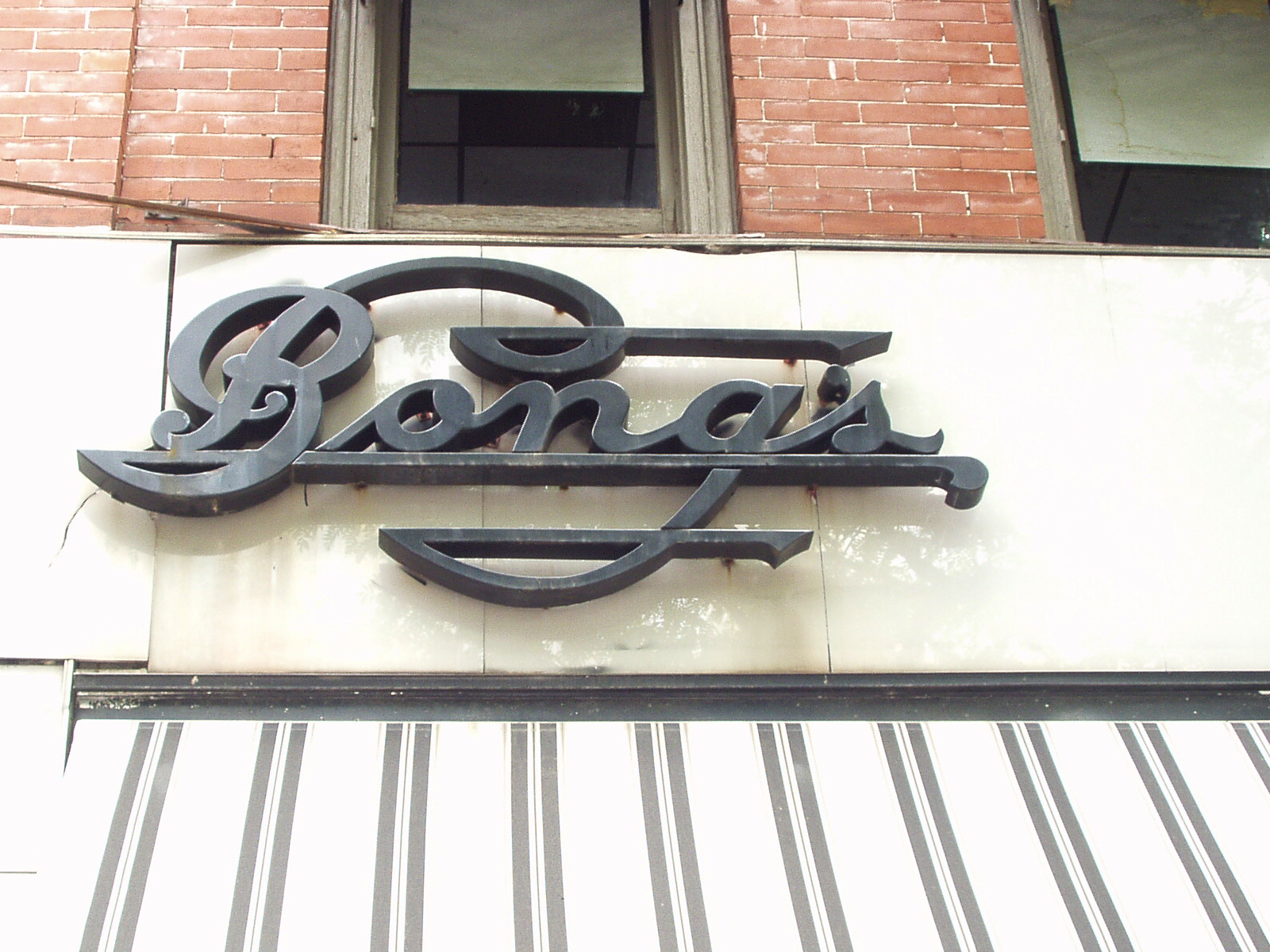 |
| Interesting typography treatment for this jeweler’s sign. |
 |
| A restored Whizzer bike |
 |
| Mail slot in a darkened corner along Main Street in Corning, NY |
Subscribe to:
Posts (Atom)